

Does Lion's Mane Work? What the Research Shows

Lion's mane has been sold as a brain supplement for about a decade and eaten as food for far longer. The short version of the science on lion's mane benefits: the laboratory work is genuinely interesting and the human work is thin. Both halves matter, so here is what is known, what a label hides, and how to use it.
What lion's mane is, before anyone put it in a capsule
Hericium erinaceus grows out of wounds in hardwood trees, usually beech and oak, across the temperate forests of North America, Europe and Asia. It looks less like a mushroom than a frozen waterfall, which is where its common names come from. In Japan it is yamabushitake, after the robes of mountain-dwelling monks.
It is a food first. Cooked properly it is dense and stringy, closer to crab than to a portobello. Most of a fresh specimen is water; the dry weight is largely polysaccharides, including beta-glucans. Hold on to that word. Beta-glucan is the most useful thing printed on a supplement label.
Hericenones, erinacines, and what NGF has to do with it
The research interest traces to two families of compounds. Hericenones come from the fruiting body, the part you would recognize as a mushroom. Erinacines come from the mycelium, the fine network the fungus runs through wood. Different molecules, different tissues, which is why "lion's mane" on an ingredient panel tells you less than people assume.
In cell culture, erinacines reproducibly stimulate synthesis of nerve growth factor, or NGF, a protein involved in the growth and maintenance of neurons. The hericenone evidence is shakier: hericenones C, D and E failed to raise NGF gene expression in human astrocytoma cells. A detail usually left out of the marketing: the NGF signal is measured in glial cells, the support cells that actually make NGF, and the effect on neurons is downstream of what those cells secrete. The proposed mechanism is indirect from the start.
A 2025 systematic review of preclinical studies found erinacines, mostly in rodent models, associated with neurotrophin signaling and neurite outgrowth in laboratory measures. None of those laboratory findings has been shown to produce a comparable effect in people. That is a real body of evidence. It is also cells in dishes and animals given purified compounds at concentrations nobody eats. How much of it survives a human digestive tract is poorly characterized.
Lion's mane benefits: what the human trials found
There are only about a dozen controlled human trials. The six most-cited are below. It is not the whole list: the trials in clinical populations sit outside it, including Li 2020, a 49-week study of erinacine A-enriched mycelium in a diagnosed clinical population that reported a better cognitive screen and daily-living score than placebo, and an eight-month trial in 80 hearing-impaired older adults.
| Study | People | Amount per day | Length | Result |
|---|---|---|---|---|
| Mori, 2009 (Japan) | 30 adults, 50 to 80 | 3 g dried fruiting body | 16 weeks | Scores on a Japanese cognitive scale rose during use, then fell back within four weeks of stopping |
| Nagano, 2010 (Japan) | 26 women | 2 g powder baked into cookies | 4 weeks | Small movement on self-reported mood questionnaires |
| Saitsu, 2019 (Japan) | 31 healthy adults over 50 | 0.8 g fruiting-body powder | 12 weeks | MMSE improved, but both groups improved over time; Benton visual retention and paired-word learning did not move |
| Docherty, 2023 (UK) | 43 adults, 18 to 45 | 1.8 g mushroom complex | Single dose, then 28 days | Quicker Stroop performance 1 hour after a single dose (p = 0.005); after 28 days subjective stress only trended lower (p = 0.051) and delayed word recall was worse than placebo |
| Grozier, 2022 (US) | 24 adults | 10 g | 28 days | No measurable effect on cognition or metabolic flexibility |
| Crossover trial, 2025 (UK) | 18 adults, 18 to 35 | 3 g of a 10:1 extract, single dose | 90 minutes | Manual dexterity improved sharply; two executive-function tests got worse; mood unchanged |
Read down the table and the pattern is plain. Sample sizes in the tens. A different preparation every time, from raw powder to a 10:1 extract, across more than a tenfold dose range. Outcome measures that rarely overlap, so almost nothing has been replicated. A 2025 systematic review in Frontiers in Nutrition could not pool the results at all: the reporting was too incomplete and the methods too different.
Two caveats belong in any honest summary. The Mori trial, the one cited most, was run in a patient population recruited through a clinic and taking part under medical supervision, and findings in a patient population do not transfer to a healthy adult. The 2025 crossover shows the studies do not all point one way: the session that produced a large gain on dexterity also produced worse scores on tests of inhibition. An independent research foundation that reviews this literature and sells nothing calls the human evidence weak and mixed and notes that no dose has been established for any use. Anyone who tells you the question is settled has not read it.
Fruiting body versus mycelium on grain
This is the part that changes what you buy.
Growing a fruiting body takes months and real infrastructure. Growing mycelium is fast and cheap: sterilize a bag of grain, usually oats, rice or sorghum, inoculate it, let the fungus thread through. The catch is that fungus and grain cannot practically be separated afterward, so the whole mass is dried and milled. What ships is part mushroom, part starch.
Laboratory analyses published by the mushroom-extract trade, most of them by fruiting-body suppliers with a stake in the answer, have repeatedly found grain making up the majority of finished weight in products labeled as mycelium, with beta-glucan in the low single digits and starch far higher. Fruiting-body extracts are generally expected to test above 20 percent, and better ones above 30. That is the difference between a mushroom supplement and an oat supplement with a mushroom on the box.
What to look for on a label
- The word used for the ingredient. "Mushroom" or "fruiting body" is one thing. "Mycelial biomass", "myceliated brown rice" or "fermented oats" is another.
- A beta-glucan percentage, reported separately from "polysaccharides". Total polysaccharides can quietly include grain starch, which is why the vaguer number is often the bigger one.
- Whether that figure describes the extract or the finished blend. Not the same claim.
- An extract ratio, and ideally the solvent. Hericenones are not especially water soluble, so water-only and alcohol extraction do not pull the same things.
- For a mycelium product, erinacine A stated in mg/g and verified by HPLC. Without a number, there is no way to know.
One correction to the usual internet advice: mycelium is not the villain. Erinacines exist only in mycelium, and the Taiwanese erinacine A research used mycelium grown in liquid fermentation, harvested from the broth with no grain involved. That is a legitimate ingredient. The problem is grain sold as mushroom, a different thing wearing the same word.
Why cordyceps sits next to lion's mane
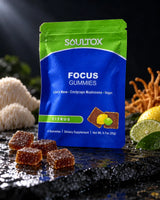
Cordyceps is in SOULTOX FOCUS alongside lion's mane because it does an unrelated job. The research below is on Cordyceps militaris, the cultivated species the supplement trade uses. Its signature compound, cordycepin, is structurally close to adenosine. In cells it is phosphorylated to cordycepin monophosphate, which mimics AMP and switches on AMPK, part of how a cell manages its energy budget under load. That is cell-culture pharmacology at concentrations a gummy does not reach.
The human evidence is early and mixed. A 2017 randomized trial gave 28 people 4 g per day of a multi-strain mushroom blend whose lead ingredient was C. militaris. After one week nothing reached significance; in the 10 who continued to three weeks, VO2 max improved (+4.8 mL/kg/min, p = 0.042), with gains in time to exhaustion and ventilatory threshold that rested on confidence-interval analysis rather than a significant interaction. A 2026 narrative review gathered five intervention studies published from 2017 to 2024, covering 321 participants aged 16 to 35 at 1 to 12 g per day, and called the findings inconsistent, partly because several used multi-ingredient formulas in which the mushroom cannot be separated from everything else.
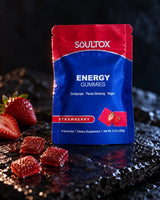
What the pairing gives you is two mushrooms with different research stories and no stimulant between them. FOCUS has no caffeine. Four gummies to a pack, vegan, gluten-free, non-GMO, $4.49. No caffeine, and nothing to time around your last cup of coffee. If you want the lift as well, that is a different product: ENERGY puts cordyceps with Panax ginseng and 25 mg of caffeine per gummy.
How to take lion's mane
Nothing in the literature supports a clever protocol, so do not build one. What the trials that found anything have in common is duration, not timing.
- Anchor it to something you already do without thinking. Coffee, keys, commute. Consistency is the one variable you control well.
- Give it at least four weeks before forming an opinion. The studies that reported anything ran 4 to 16 weeks.
- Decide in advance what you are judging, and keep a rough note. Otherwise you are grading your own homework from memory.
- Take it with food if that makes it easier to remember. Two trials baked it into cookies or muffins, and nothing in the literature shows food matters either way.
- Do not start three new things at once. If something changes you will not know what moved it.
- Cook the real mushroom when you find it fresh. It is good food, and cheaper per gram than any capsule.
One note from the Mori trial: the improvement faded within four weeks of stopping. Nothing in the data suggests any of this banks.
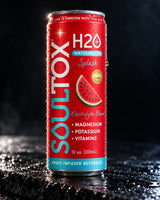
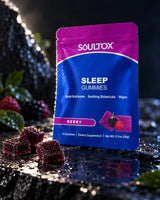
Keep the boring inputs honest. Focus sits downstream of sleep, water, food and light long before it sits downstream of a mushroom. A can of Watermelon Splash covers the hydration end of an afternoon at 30 calories, with L-theanine, 90 mg of potassium and 21 mg of magnesium, and SLEEP is the reishi option for the other end of the day. If you run any of it daily, build a bundle and pay less per unit.
Safety, allergies, and who should skip it
Across the published trials lion's mane was well tolerated. Reported effects were mild and uncommon: stomach discomfort, loose stools, headache, skin rash. There is one case report of a 63-year-old man who developed acute respiratory distress after prolonged use, which the authors attributed to an allergic response. A single case report is not a risk rate. It is a reminder that mushrooms are a recognized allergen, and if you react to them, leave this one alone.
Long-term safety data is limited for a simple reason: the trials are short, and almost none ran past four months. If you are pregnant or nursing, taking prescription medication, or heading into surgery, ask a clinician before adding anything new. We are not going to hand you a dose, and you should be skeptical of any brand that does.
Common questions
Does lion's mane actually work?
The preclinical work on hericenones and erinacines is real and interesting. The human work is small, short, inconsistent and largely unreplicated, and independent reviewers call it weak and mixed. Anyone answering with a flat yes is selling you something.
How long before I would notice anything?
The trials that reported effects ran from four to sixteen weeks, with one acute study testing at 90 minutes. Give it a few weeks of consistent use and decide in advance what you are watching for. In the one long trial that measured it, the effect faded within four weeks of stopping.
Is fruiting body always better than mycelium?
No. Fruiting body beats mycelium grown on grain, because the grain cannot be separated out and ends up as most of the powder. Mycelium grown in liquid fermentation is a real ingredient and the only source of erinacines. What matters is whether the label gives you a beta-glucan or erinacine A number you can check.
Does lion's mane contain caffeine?
No. It is a mushroom, not a stimulant, and there is no caffeine in FOCUS. If you want caffeine with your mushrooms, ENERGY carries 25 mg per gummy.
Can I just eat the mushroom instead of taking a supplement?
Yes, and it is worth doing. Several trials used plain dried fruiting-body powder rather than an extract, so whole mushroom is not a lesser form. The case for a gummy is practical: fresh lion's mane is hard to find and easy to forget.
If you want to try it without the research project, FOCUS is four citrus gummies for $4.49, lion's mane with cordyceps, no caffeine. Read the panel, give it a few weeks, judge it yourself. That is the only test that counts.
These statements have not been evaluated by the Food and Drug Administration. These products are not intended to diagnose, treat, cure or prevent any disease.